




Product Video
Products Description
|
Brand |
Product Name |
Model |
Part Number |
|
Caterpillar |
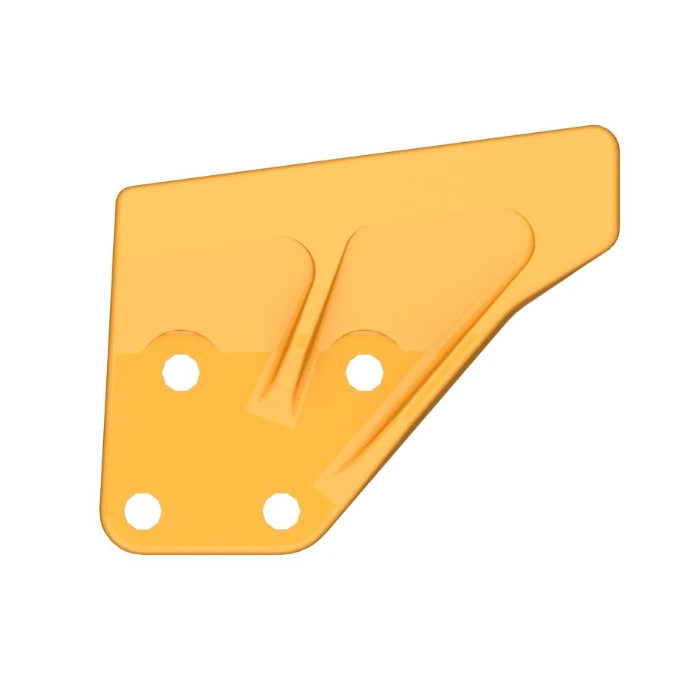
CAT Bucket Sidecutter | 320D | 7Y0203 |
Product Details
|
Product Name |
CAT Bucket Sidecutter |
|
Part Number |
7Y0203 |
|
Origin |
US |
|
Brand Name |
CAT |
|
Model |
320D |
|
Price |
Negotiable |
|
Packing Details |
Standard Export Packing |
|
Delivery Time |
0-30 Days |
|
Payment Term |
L/C, T/T |
|
Price Term |
FOB, CIF, CFR |
|
Supply Capacity |
50,000 PCS/Month |
|
Minimum Order Quantity |
1 PC |
|
Material |
High Quality Steel |
|
Technology |
Precision Machining |
|
Quality |
Original Factory Standard |
|
After-Sales Service |
Full Support, Online Service |
|
Color |
Standard Caterpillar Color or Customizable |
|
Application |
Excavator |
|
Customizable |
including customized materials, surface treatment and specifications |
GET Edge Specifications
Technical Specifications
Part Number: 7Y0203
Machine Type: Excavator
Position: LH (Left Hand)
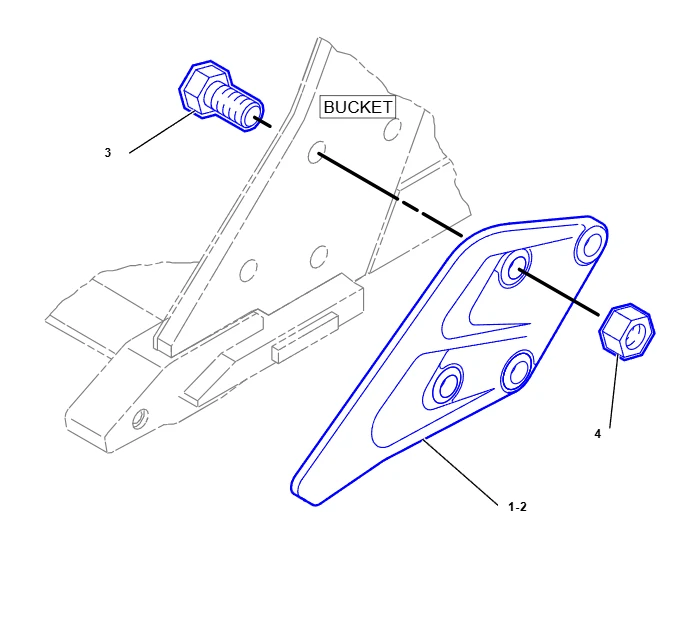
Attachment Method: Bolt-on (4 Holes)
Length: 290 mm (11.417 in)
Height: 50.8 mm (2.0 in)
Width: 210 mm (8.27 in)
Weight: 7.25 kg (15.96 lbs)
Material: Alloy Steel
Hardness: 48 - 52 HRC
Bolt Hole Spacing: 82.55 mm (3.25 in)
Compatible Models: CAT 311 / 312 / 313 / 314 / E110B / E120B
Corresponding RH Part: 7Y0204

Martensitic Hardness Gradient
The Bucket Sidecutter 7Y0203 is heat-treated to a specific hardness range of 48-52 HRC. This creates a martensitic surface matrix designed to withstand high-stress abrasive sliding against rock, while the unhardened core retains enough impact toughness to prevent brittle fracture when the bucket corner strikes immovable objects.
Four-Point Tension Distribution
The 4-hole bolt pattern is not merely for attachment; it is engineered to distribute interfacial shear stress evenly across the bucket sidewall. This prevents stress concentration at the mounting points, which otherwise leads to permanent deformation of the bucket lip or fatigue elongation of the bolt holes under continuous breakout forces.
Geometric Sacrificial Shielding
With a 210 mm width and 50.8 mm thickness, this left-hand cutter alters the material flow trajectory during digging. It acts as a geometric sacrificial shield, absorbing the primary abrasive contact and preventing rocks from directly grinding against the structural bucket body, thereby preserving the heavy steel welds of the main assembly.
Volumetric Degradation Threshold
As the 290 mm cutter wears down, its structural integrity does not decline linearly. Once the thickness is reduced below 25 mm, the stress-bearing capacity drops exponentially. The cutter must be retired at this threshold to prevent the impact load from transferring directly to the bucket corner, which can cause catastrophic corner tearing.
Bucket Integrity & Wear Mitigation
Sacrificial Shielding for Structural Welds
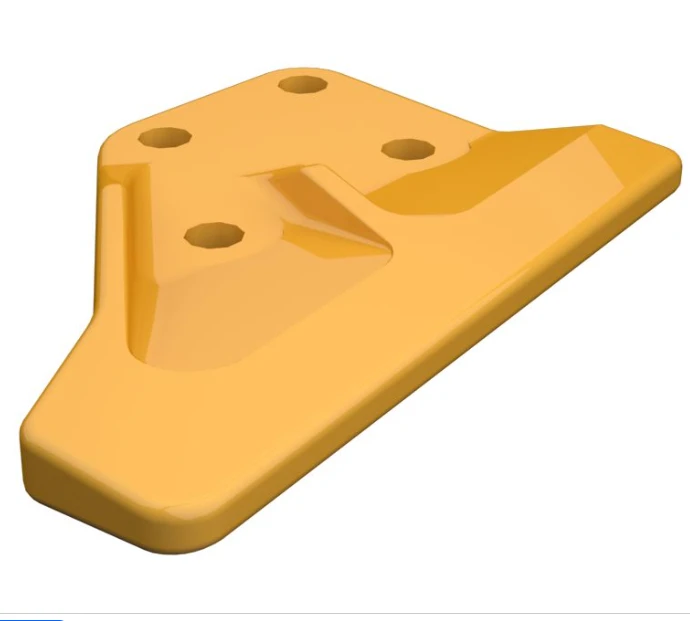
The Bucket Sidecutter 7Y0203 functions as a primary sacrificial component. By taking the brunt of abrasive friction against the bucket sidewall, it prevents direct rock-to-steel contact. This shielding is critical because repairing a worn or torn bucket sidewall requires extensive gouging, preheating, and heavy weld repair. Replacing the 7Y0203 cutter preserves the structural integrity of the main bucket body at a fraction of the cost.
Retaining the Side Cutting Geometry
As the bucket digs, the side edge acts as a secondary cutting plane. When unprotected, the sidewall blunts rapidly, increasing lateral drag and twisting the bucket during the dig cycle. The 7Y0203 maintains a sharp, defined edge, allowing the bucket corner to slice through compacted overburden smoothly. This reduces torsional stress on the stick and bucket linkage, ensuring cleaner trench walls and lower mechanical strain.

Load Path Redirection at the Bolted Interface
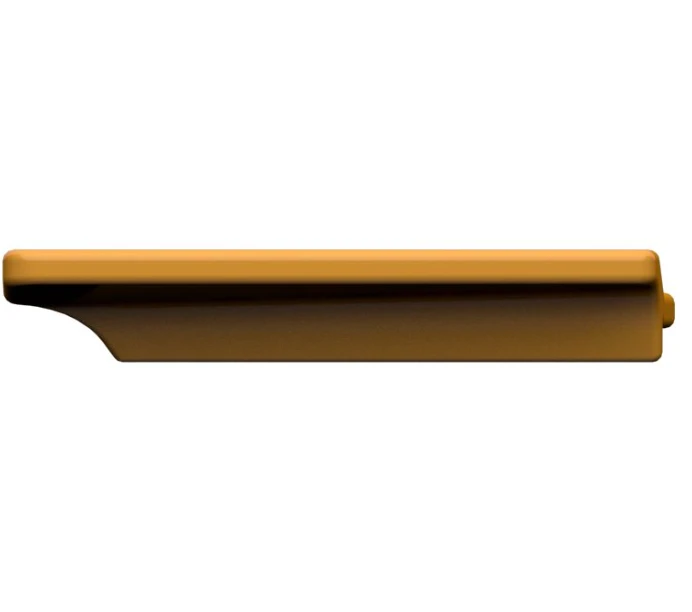
The 4-bolt mounting pattern is engineered to redirect peak impact forces away from the bucket sidewall welds. When the corner strikes an immovable object, the cutter absorbs the high bending moment. Instead of concentrating stress at the weld toe (which causes heat-affected zone fatigue), the force is distributed through the bolts across a broader surface area, effectively dampening the shock load transmitted to the main bucket structure.
Wear Limit Diagnostics
Volumetric Thickness Threshold
Do not rely solely on visual length. Use a caliper to measure the remaining thickness of the 7Y0203 cutter body. The original thickness is 50.8 mm (2.0 in). When the thickness is worn down below 25 mm, the structural integrity drops exponentially. At this stage, the cutter can no longer absorb impact energy, and the force will transfer directly to the bucket corner, causing severe structural damage.
Clamp Load Retention Audit
The 4 mounting bolts are subjected to continuous high-frequency vibration. Every 250 working hours, use a calibrated torque wrench to verify the clamp load. If the bolts have lost their pre-load, the cutter will micro-shift under digging stress. This movement enlarges the bolt holes and creates a gap, allowing abrasive slurry to penetrate between the cutter and the bucket sidewall, accelerating wear on both surfaces.
Asymmetrical Wear Pattern Analysis
Inspect the wear pattern along the 290 mm edge. If the wear is heavily concentrated at the leading tip while the rear remains thick, it indicates improper bucket entry angle. If the edge wears unevenly from top to bottom, it suggests the bucket is being dragged backward during the dig cycle. Correcting the operator's digging technique based on this wear pattern can significantly extend the lifespan of the cutter.
Stress Riser Inspection at Bolt Holes
The 4-hole interface is the primary stress concentration zone. Clean the area around the bolt heads and inspect the steel surface for hairline cracks radiating outward from the hole edges. These cracks are indicators of high-cycle fatigue. If any crack is detected, the cutter must be replaced immediately. A cracked cutter can fragment under load and damage the Bucket Sidecutter 7Y0203 or become a safety hazard.
STONE


Stone is a leading supplier of engineering machinery parts, focusing on providing high-quality parts for mining companies. Since its establishment in 2004, we have been based in Shanghai, China, and have built our own brand STONE, becoming a trusted choice in the industry. We are committed to providing a variety of parts including bulldozers, excavators and wheel loaders for well-known brands such as Caterpillar and Komatsu. Our product line covers a full range of OEM parts, such as Track Chain, Track Rollers, Sprocket, Excavator Buckets, Blades, Excavator Cylinders, Swing Circles, and various electrical and hydraulic components to ensure that our customers' stringent requirements for quality and performance are met.
quality
years experience
service
hours warrant
Q&A

What does a visible gap between the Bucket Sidecutter 7Y0203 and the bucket sidewall indicate after tightening the bolts?
A visible gap indicates that the mating surfaces are not flush, which is usually caused by weld spatter, paint buildup, or deformation of the bucket sidewall. If the cutter is pulled down over an uneven surface by the bolts, it creates high interfacial shear stress at the bolt holes. This uneven clamping force will cause the cutter to crack under load. The sidewall must be ground flat before installation.
Why does a worn 7Y0203 side cutter accelerate the cracking of the main bucket welds?
The cutter is designed to act as a wear shield. When its thickness drops below 25 mm, it loses the ability to absorb impact energy. The high bending moment from striking rocks is no longer dissipated by the cutter. Instead, the stress path redirects directly into the bucket corner welds, causing high-cycle fatigue in the heat-affected zone (HAZ) and leading to catastrophic structural tearing of the main bucket.
Can I reuse the original 4 bolts when installing a new side cutter?
Hot Tags: 4 Hole LH Bucket Sidecutter 7Y0203 Protector Side Cutter For Cat Excavator, China 4 Hole LH Bucket Sidecutter 7Y0203 Protector Side Cutter For Cat Excavator manufacturers, suppliers, factory